%20-%20Copy.png)
10 Signs Your Warehouse Roof Needs Replacing

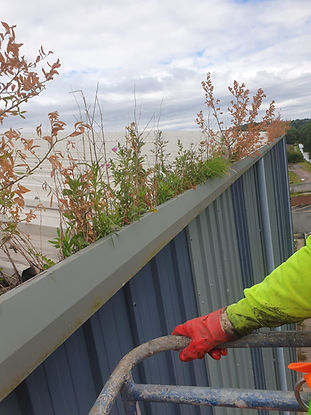
For warehouse operators, facilities managers, and commercial property owners, the roof is one of the most critical components of the building. It protects stock, equipment, employees, and day-to-day operations from weather damage and environmental exposure.
However, many warehouse roofs deteriorate gradually over time, making it difficult to recognise when repairs are no longer enough.
Knowing the warning signs early can help you avoid costly emergency repairs, operational disruption, and unexpected downtime.
In this guide, we cover 10 common signs that indicate warehouse roof replacement may be necessary.
1. Persistent Warehouse Roof Leaks
Occasional leaks can sometimes be resolved with minor repairs. However, repeated or widespread leaks are often a sign of deeper roofing system failure.
Water ingress may indicate:
Failing roof sheets
Damaged flashings
Worn seals
Corroded fixings
Membrane failure
If leaks continue returning despite repairs, warehouse roof replacement may be the most cost-effective solution.
2. Corrosion and Rust
Metal roofing systems are commonly used on warehouses due to their durability, but they remain vulnerable to corrosion over time.
Signs of corrosion include:
Rust patches
Discoloured roof sheets
Surface deterioration
Weakening structural integrity
Once corrosion becomes widespread, repairs may only provide temporary relief.
3. Rising Energy Bills - Warehouse Roof
Your roof plays a major role in thermal performance.
If heating or cooling costs are increasing without a clear explanation, poor roof insulation or degraded roofing materials could be contributing.
A modern warehouse roof replacement can significantly improve:
Insulation
Temperature regulation
Energy efficiency
Operating costs
This is especially important for large industrial buildings with substantial energy usage.
4. Ponding Water on Flat Roof Areas
Standing water is a serious warning sign.
Ponding water can accelerate:
Membrane deterioration
Structural stress
Leak formation
Internal water damage
A properly designed roofing system should drain efficiently.
Persistent ponding often indicates underlying design or structural issues.
5. Damaged Roof Sheets or Panels
Cracked, warped, loose, or damaged roof sheets compromise the building envelope.
Common causes include:
Weather exposure
Impact damage
Ageing materials
Poor installation
Thermal movement
As damage increases, replacement becomes more practical than repeated repairs.
6. Frequent Repair Costs
A useful rule for facilities managers:
If you are repeatedly paying for repairs, ask whether those costs are adding up to more than long-term replacement.
Repeated repairs often indicate the roof is reaching the end of its service life.
Instead of ongoing reactive spending, warehouse roof replacement may provide better long-term value.
7. Internal Damp or Condensation Issues
Excessive condensation can damage internal environments and stored goods.
Signs include:
Damp smells
Visible mould
Moisture build-up
Water staining
Poor air quality
This can indicate failing insulation or poor roof ventilation.
Modern roofing systems help improve moisture control significantly.
8. Daylight Visible Through the Roof
If light can be seen through roof joints, gaps, or damaged sheets, water and cold air can also enter.
Visible gaps may indicate:
Structural movement
Failed joints
Loose panels
Material fatigue
This is a major indicator that a roof inspection is needed urgently.
9. Roof Age
Many warehouse roofs installed decades ago are now reaching end-of-life.
Typical lifespans vary depending on materials and maintenance history.
Questions to ask include:
How old is the roof?
Has it been regularly maintained?
Have previous repairs been extensive?
Older roofs often become more expensive to maintain over time.
10. Operational Disruption Caused by Roofing Issues
The biggest cost of a failing roof is often not the repair bill.
It is the disruption caused to your business.
Roofing failures can result in:
Damaged stock
Production delays
Unsafe work areas
Lost revenue
Customer delays
For many warehouse operators, preventing downtime is the biggest reason to invest in proactive replacement.
Repair, Over-Cladding or Full Replacement?
Not every ageing roof requires complete replacement.
Depending on the condition of the existing roof, possible solutions may include:
Localised repairs
Refurbishment
Over-cladding systems
Full re-roofing
A professional roof survey is the best way to determine the most cost-effective option.
How Boss Roofing and Cladding Can Help
At Boss Roofing and Cladding, we help warehouse operators and commercial property owners across the UK assess the condition of ageing roofing systems.
Our specialists provide:
If you have noticed any of these warning signs, now is the time to act before small issues become major problems.
Contact Boss Roofing and Cladding today to arrange a professional roof survey and discuss the best solution for your building.


